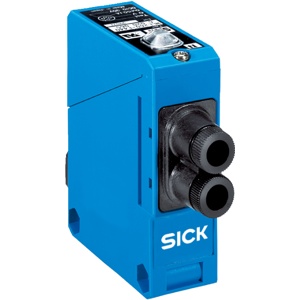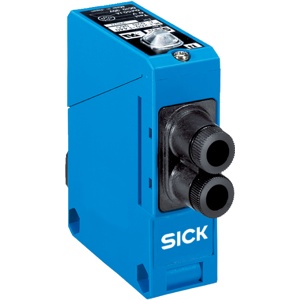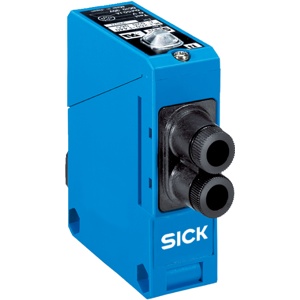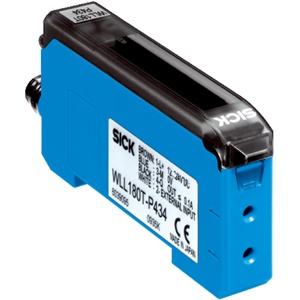
Image for reference. Refer to the datasheet for exact dimensions.
Sick WLL180T-P434 Fiber Optic Sensor
Mail us for Sick M8 Connector Fiber Optic Sensor WLL180T-P434, 6039095 at the best rates. Light/dark switching, Visible red light, Plastic, ABS/PC, PNP.
- Brand
- Sick
- Model number
- WLL180T-P434
Send this enquiry to IndMALL on WhatsApp — the model and page link are filled in. Add the quantity and your company details, and we connect you with the right suppliers.
Sick WLL180T-P434 technical specifications
| Device type | Fiber-optic sensors |
|---|---|
| Dimensions (W x H x D) | 10.5 mm x 34.6 mm x 71.9 mm |
| Housing design (light emission) | Rectangular |
| Sensing range max. | 0 m ... 20 m (Through-beam system) 1) 2) |
| Sensing range | 0 mm ... 1,400 mm, Proximity system 3) 0 m ... 18 m, Through-beam system 1) 2) |
| Type of light | Visible red light |
| Light source | LED |
| Wave length | 650 nm |
| Indication | 7-segment |
| Supply voltage | N/A |
| Current consumption | 50 mA 3) |
| Switching output | PNP |
| Switching mode | Light/dark switching |
| Response time | ≤ 16 µs, ≤ 70 µs, ≤ 250 µs, ≤ 2,000 µs, ≤ 8,000 µs |
| Switching frequency | 31.2 kHz, 7.1 kHz, 2 kHz, 250 Hz, 62.5 Hz |
| Connection type | Male connector M8, 4-pin |
| Housing material | Plastic, ABS/PC |
| Ambient operating temperature | –25 °C ... +55 °C |
| Ambient temperature, storage | –40 °C ... +70 °C |
| Weight | 20 g |
Overview
Sick WLL180T-P434 Fiber Optic Sensor features rectangular housing, visible red LED light, PNP output, and M8 connector interface design. This Sick M8 Connector Fiber Optic Sensor uses an LED light source at 650 nm wavelength , supports light/dark switching , delivers up to 31.2 kHz switching frequency , and enables long-distance through-beam sensing for industrial automation. The WLL180T-P434 belongs to the WLL series and is applied where fast response and stable optical detection are required. Its long sensing capability supports detection across extended distances, while the selectable response times allow adaptation to different process speeds. The PNP output enables direct integration with standard PLC inputs in high-speed automation environments.