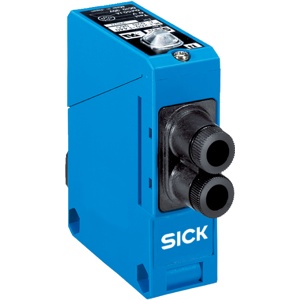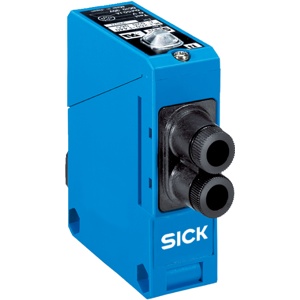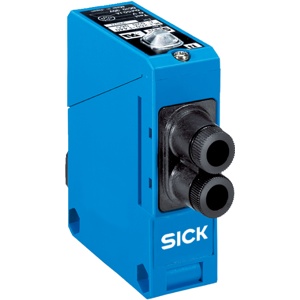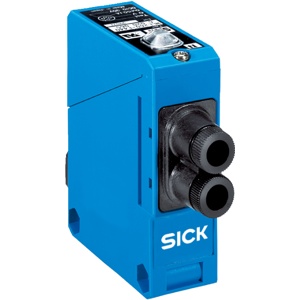
Image for reference. Refer to the datasheet for exact dimensions.
Sick WLL260-F240 Fiber Optic Sensor
IndMALL offers Sick Cable Gland Fiber Optic Sensor WLL260-F240, 6020064 at economical prices. Visible red light, PNP output, Plastic, ABS, 35 mA, LED.
- Brand
- Sick
- Model number
- WLL260-F240
Send this enquiry to IndMALL on WhatsApp — the model and page link are filled in. Add the quantity and your company details, and we connect you with the right suppliers.
Sick WLL260-F240 technical specifications
| Device type | Fiber-optic sensors |
|---|---|
| Dimensions (W x H x D) | 25 mm x 77.8 mm x 63 mm |
| Housing design (light emission) | Rectangular |
| Sensing range max. | 0 mm ... 65 mm (Proximity system) 1) 2)0 mm ... 110 mm (Proximity system) 1) 3)0 mm ... 800 mm (Through-beam system) 2) |
| Sensing range | 0 mm ... 50 mm, Proximity system 2)0 mm ... 90 mm, Proximity system 3)0 mm ... 700 mm, Through-beam system 2) |
| Type of light | Visible red light |
| Light source | LED |
| Wave length | N/A |
| Indication | LED |
| Supply voltage | N/A |
| Current consumption | 35 mA 3) |
| Switching output | PNP |
| Switching mode | Light/dark switching |
| Response time | ≤ 0.7 ms |
| Switching frequency | 700 Hz |
| Connection type | Cable gland |
| Housing material | Plastic, ABS |
| Ambient operating temperature | –25 °C ... +55 °C |
| Ambient temperature, storage | –40 °C ... +70 °C |
| Weight | 120 g |
Overview
Sick WLL260-F240 Fiber Optic Sensor features rectangular housing, visible red LED light, PNP output, and cable gland connection interface. This Sick Cable Gland Fiber Optic Sensor operates with a 0–50 mm proximity sensing range , supports light/dark switching , delivers ≤ 0.7 ms response time , and maintains a 700 Hz switching frequency for industrial automation. The WLL260-F240 is used in environments where stable optical detection and fixed cable connectivity are required. Its proximity sensing capability supports accurate detection of small objects, while the PNP output enables direct integration with standard control systems. The fast response time and stable switching frequency ensure consistent signal performance in continuous automation workflows.