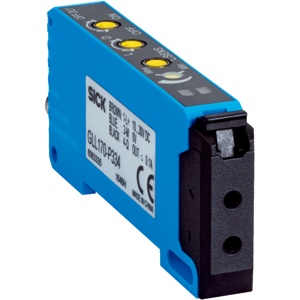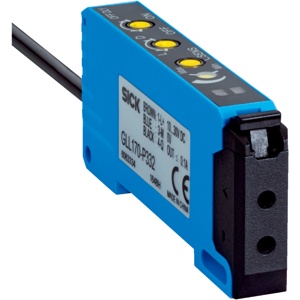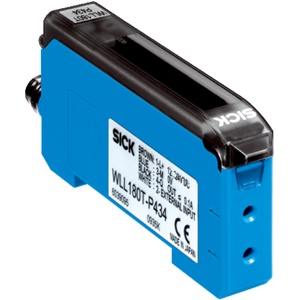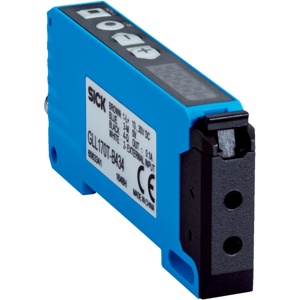
Image for reference. Refer to the datasheet for exact dimensions.
Sick GLL170T-B434 Fiber Optic Sensor
Get a quote for Sick Red Light Fiber Optic Sensor GLL170T-B434, 6063341 at the best price. Male connector M8, 4-pin, Plastic, PC/POM, 10 V DC ... 30 V DC.
- Brand
- Sick
- Model number
- GLL170T-B434
Send this enquiry to IndMALL on WhatsApp — the model and page link are filled in. Add the quantity and your company details, and we connect you with the right suppliers.
Sick GLL170T-B434 technical specifications
| Device type | Fiber-optic sensors |
|---|---|
| Dimensions (W x H x D) | 10 mm x 31.7 mm x 72.5 mm |
| Housing design (light emission) | Rectangular |
| Sensing range max. | 0 mm ... 400 mm, Proximity system 1) 2)0 mm ... 1,320 mm, Through-beam system 3) |
| Sensing range | 0 mm ... 350 mm, Proximity system 1) 2)0 mm ... 1,100 mm, Through-beam system 3) |
| Type of light | Visible red light |
| Light source | LED |
| Wave length | 632 nm |
| Indication | Display |
| Supply voltage | 10 V DC ... 30 V DC 1) |
| Current consumption | 40 mA 3) |
| Switching output | PNPNPNSelectable via menu |
| Switching mode | Light/dark switching |
| Response time | ≤ 250 µs, Selectable via menu ≤ 50 µs |
| Switching frequency | 2 kHz10 kHz |
| Connection type | Male connector M8, 4-pin |
| Housing material | Plastic, PC/POM |
| Ambient operating temperature | –25 °C ... +55 °C |
| Ambient temperature, storage | –40 °C ... +70 °C |
| Weight | 22 g |
Overview
Sick GLL170T-B434 Fiber Optic Sensor features rectangular housing, visible red LED light, selectable PNP output, and 10–30 VDC supply. The Sick Red Light Fiber Optic Sensor GLL170T-B434 operates with ≤ 250 µs response time , male M8 4-pin connector , and menu-selectable output settings, and is categorized under Sick Fiber Optic Sensors for structured detection systems. The GLL170T-B434 supports light and dark switching modes and maintains stable sensing performance across defined proximity and through-beam ranges. Its compact housing enables installation in restricted spaces, while the fiber optic sensing principle supports reliable detection of small or fast-moving objects.